 Easy Twin
The fastest way to make homework fun is to make it feel winnable: a short task with a clear finish line, a choice or two your child gets to make, and progress they can see grow. Add a little company and a little novelty, and celebrate effort instead of perfect pages. Big bribes are the one thing to go easy on, because they can make the work itself feel like a chore.
Why does my child hate doing homework?
Most kids dislike homework because it feels long, out of their control, and easy to fail at, not because they hate learning. A page of twenty problems looks endless to a 7-year-old, and every wrong answer feels like proof they're "bad at math."
Games get the opposite right: short levels, frequent wins, choices, a character to care about. You don't need a video game, just those few pieces.
How do I make homework feel shorter?
Make homework feel shorter by cutting it into small rounds with a finish line your child can see. "Do your math" is a fog. "Do problems 1 to 5, then you get a stretch break" is a level.
Some ways to draw the finish line:
- Fold the page so only the first five problems show. Unfold for the next round.
- Use a timer for effort, not speed. "Work for 10 minutes, then we check" works better than "finish fast."
- Mark each round done with a check, a sticker or a colored dot at the top of the page.
Younger kids (K–2) usually do well with rounds of 3 to 5 problems or 5 to 10 minutes; older elementary kids can handle 10 to 15 minutes.
Does giving kids choices really help?
Yes, small real choices help kids feel in charge of the work, and kids who feel in charge tend to start sooner and stick with it longer. The choices don't need to be big. They just need to be real.
| Instead of… | Try offering… |
|---|---|
| "Do your homework now." | "Before snack or after snack?" |
| "Start with math." | "Spelling or math first?" |
| "Sit at the table." | "Kitchen table or the floor with a clipboard?" |
| "Do the next problem." | "Pick any problem on this half to start with." |
Keep the non-negotiable part (the homework happens) fixed and let your child own the rest.
Why do characters and companions make practice more fun?
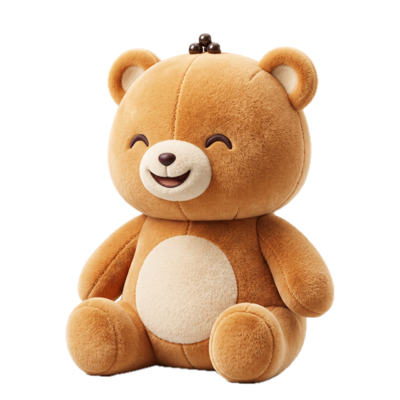
A companion makes practice feel like something you do together instead of a test you take alone. Kids will often explain an answer to a stuffed animal that can't judge them, and that explaining is good practice.
A homework buddy works best when it has a small job:
- It "doesn't know" how to do the problem, so your child has to teach it.
- It cheers when your child tries the hard one first.
Older kids who've outgrown plush toys often get the same lift from a parent doing their own "homework" (bills, a book) at the same table.
How do streaks and visible progress help?
Streaks and visible progress help because kids can see that small efforts add up, which makes the next small effort feel worth it. A paper chart on the fridge with one sticker per practice day does a lot. So does a jar where your child adds a marble each time they finish a round.
Keep the bar low enough to win. "10 minutes, Monday to Thursday" is easy to protect; "every day, all year" breaks in week two. When a streak breaks, start a new one the next day without a lecture.
Should I praise effort or right answers?
Praise effort, strategies and comebacks more than right answers, so that mistakes stop feeling like losing. A child who only hears "great job" when every answer is right learns to avoid hard problems. A child who hears "you used a hint and figured it out" learns that getting stuck is part of the game.
Hints are not cheating. They are a way to keep going instead of giving up, and a child who uses one and then solves the problem has learned more than a child who guessed and moved on. If you want more on this, our guide on turning homework mistakes into practice shows what to say when an answer is wrong.
Why is redoing the same worksheet so boring?
Redoing the same page is boring because your child already knows what's coming, and it often teaches less too: they may just remember the old answers. Fresh questions on the same skill keep it interesting and make your child actually think again.
Learning researchers call that effortful recall "practice testing." In a widely cited review, John Dunlosky and colleagues rated practice testing and spreading practice out over time as two of the most effective study strategies, as they explain in Strengthening the Student Toolbox. For homework, that means swapping "do this page again" for a few new problems that practice the same thing, like 63 − 28 instead of 52 − 17. Our article on why redoing worksheets doesn't work goes deeper.
How does a routine make homework easier?
A routine makes homework easier because it removes the daily argument about when. Once "snack, then 15 minutes of homework, then outside" is just how afternoons go, there's much less to negotiate.
A good routine is:
- Same time, same place most days, with supplies already there.
- Short and predictable, with a clear end.
- Followed by something your child likes.
A homework buddy and a sticker chart are fun for a week. Paired with a steady routine, they keep working for months.
Can rewards for homework backfire?
Yes, big promised rewards for every page can backfire by making kids care less about the activity itself. Psychologists call this the overjustification effect. In a classic 1973 study by Mark Lepper, David Greene and Richard Nisbett, preschoolers who already liked drawing were promised a certificate for drawing. Later, in free play, those children chose to draw less than children who got no reward or got the same reward as a surprise. The expected prize seemed to turn a fun activity into a job.
That doesn't mean all rewards are bad. A few rules of thumb help:
- Keep rewards small (a sticker, picking dinner, ten extra minutes outside), not toys or cash per page.
- Make some rewards a surprise instead of a deal announced in advance.
- Reward effort and streaks, not perfect scores, so kids aren't tempted to skip hard problems.
How does Easy Twin make homework practice fun?
Easy Twin turns a scanned school worksheet into a quest your child plays with their own plush Stuffy pet, using new questions that practice the same skills. A parent scans the page, and the app writes a "twin": one new question for each original, with new numbers, names and wording. Here's how it lines up with the ideas above:
- A companion. Your child adopts and names a Stuffy pet: Boba Bear, Astro Pup, Pixel Cat or Dino Sprout. Stuffies cheer right answers, get sleepy when practice is skipped, and perk up after a quest.
- Short levels with a finish line. Each worksheet becomes a homework quest on a quest path, with combo streaks for three first-try answers in a row, a Boss question at the end, and a treasure chest of coins.
- Small rewards tied to effort. Kids earn Twin Coins (10 for a first try, 5 for a second try, 50 for a perfect quest) and spend them on hats, capes and room decor for their Stuffy. A new Friday Drop comes to the shop each week. See coins and the Stuffy wardrobe.
- Visible progress. Streaks, a daily chest, a Sticker Book and badges like Comeback Kid (solved on the third try) and Curious Mind (solved after using both hints) celebrate effort, not just perfect pages.
- Hints instead of answers. Each question has two hints and three tries, and answers are never revealed mid-quest.
- Grown-ups stay in charge. Kid Mode keeps scanning, buying and settings behind a 4-digit parent PIN (or a grown-up multiplication question if no PIN is set).
Easy Twin doesn't grade the original homework or replace the routine above; it adds fresh, fun practice. See the full flow on how Easy Twin works. If you're comparing apps that use a pet to motivate kids, our guide to kids' learning apps with virtual pets lists what to check first.
Frequently asked questions
How can I make homework fun for a child who refuses to start?
Make the first step tiny and give your child a choice about it, like "pick any one problem on this half to start with." Starting is usually the hardest part, and a short first round with a visible finish line gets most kids moving.
Is it OK to reward my child for doing homework?
Small, occasional rewards are fine, but big prizes promised for every page can make kids care less about the work itself. Keep rewards small, sometimes a surprise, and tied to effort and streaks rather than perfect scores.
How long should a homework session be to stay fun?
Short rounds work best: about 5 to 10 minutes for kids in kindergarten to 2nd grade and 10 to 15 minutes for older elementary kids, with a quick break between rounds. Stopping while it's still going well makes the next session easier to start.
Do learning games actually help with homework?
They help when the game practices the same skills as the homework and asks your child to work out fresh answers. A game that drills unrelated skills or hands out rewards for tapping quickly is fun but does little for tonight's worksheet.
What if my child only wants the reward and rushes through?
Shift the reward from finishing to effort, for example coins or stickers for first-try answers and comebacks rather than for speed. Fresh questions on the same skill also make rushing less useful, since there are no memorized answers to fall back on.
Make a twin of your child's worksheet
Download free and get 3 free scans. Scan a page and your kid gets a quest to play with their Stuffy, or print the twin with an answer key.
Download on theApp StoreRequires iOS 26 or later. Works on iPhone and iPad.
- 3 free scans to start
- No ads, no tracking
- Kindergarten to 8th grade
Keep reading
Kids' Learning Apps With Virtual Pets: What to Look For
A virtual pet can make practice something kids look forward to, as long as the pet serves the learning instead of the other way around. Before you download one, check that the questions match real schoolwork, that rewards are earned rather than bought, and that there are no ads, loot boxes or guilt traps. This guide gives parents a checklist to use on any app.
Parent-Teacher Conference Questions to Ask About Math and Reading
The best questions to ask at a parent-teacher conference are specific ones about your child's actual work, like "Which math skill should we practice at home?" and "What do you notice when my child reads aloud?" This guide gives parents questions for math and reading by grade band, a 15-minute way to prepare, how to read report-card language, and a simple two-week plan for turning the teacher's feedback into practice.
Homeschool Worksheet Ideas: Getting More Out of the Curriculum You Already Have
You rarely need a new curriculum to get more practice. This guide shows homeschooling parents how to turn any workbook page into fresh practice, run short mastery checks, and build review into the week, with a simple way to decide between printable and on-screen days.